Another Ruling from the European Court of Human Rights: Croatia Violated the Rights of a Man Who Sought Protection!
The European Court of Human Rights (ECtHR) has issued a new judgment against the Republic of Croatia — this time in the case of Y.K. v. Croatia. The Court found that Croatia violated the rights of Yilmaz Kökbalik, a Turkish national of Kurdish origin, who had sought protection from political persecution in Croatia — but was unlawfully expelled from the country instead.
Yilmaz Kökbalik, a Kurd, opposed Erdoğan’s authoritarian regime in Turkey, speaking out for democracy, equality, and social justice in public and on social media. Because of his beliefs, ethnicity, and political activism, he was arrested, detained, tortured, and abused. He was ultimately forced to flee the country, as his safety and freedom were at serious risk.
Four years ago, he arrived in Croatia seeking asylum and protection, hoping to find safety in a democratic country. Instead of protection and support, Croatian police deprived him of his liberty, prevented him from applying for international protection, and unlawfully expelled him — putting his life in danger. He reached out for a helping hand and was met with the same kind of treatment he had fled in Turkey.
Yilmaz's intention to apply for asylum was communicated not only through his lawyer but also directly to the manager of the detention centre, in the presence of representatives from the Office of the Ombudswoman. Croatian authorities ignored these pleas. As highlighted by lawyer Marija Ana Brnčić of the law firm Jelavić & Partners, which represents Kökbalik before the ECtHR:
“The Court found that Croatian authorities denied the applicant’s lawyer access to their client — with the intention, in the Court’s view, of preventing the lawyer from assisting the applicant with his legal situation in Croatia.”
The Court also concluded that Yilmaz had no access to an effective legal remedy, as no legal process in Croatia could have stopped his removal. This is not an isolated incident — in previous cases, such as Daraibou v. Croatia, the ECtHR found that Croatia systematically obstructs access to legal assistance for refugees and migrants.
Most importantly, the Court ruled that Croatia violated the prohibition of torture, as Yilmaz was expelled to a country from which he could have been returned to Turkey — where he faced imprisonment, torture, and even death.
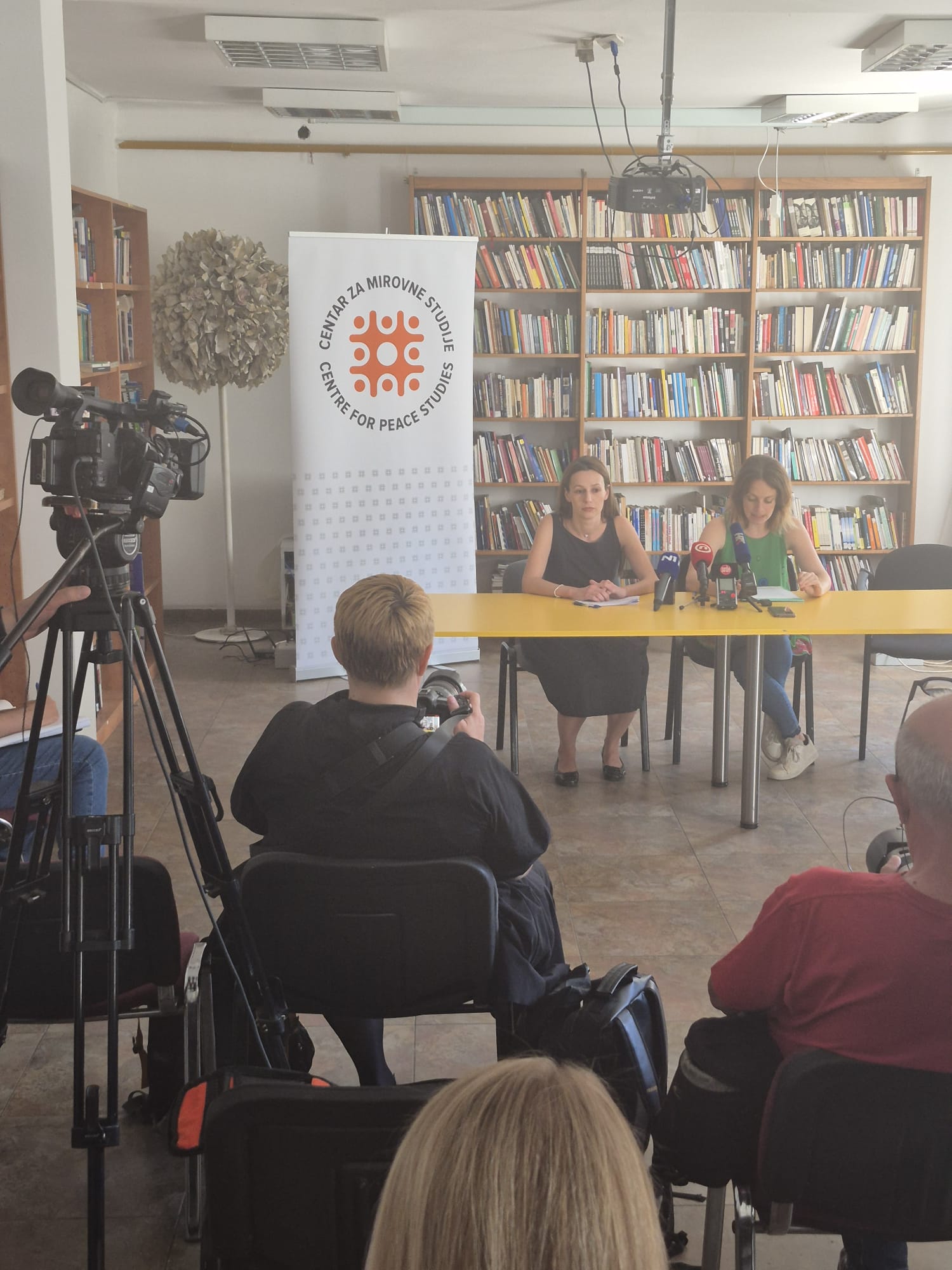
“Although the Government claimed in its submission to the Court that Kökbalik never applied for asylum, the Court found it undisputed that the authorities — including staff at the detention centre — were aware of his intention, which he expressed personally, through his lawyer, and before the Ombudswoman’s advisors in the presence of the detention centre’s manager. All of this was deliberately ignored by the police, who unlawfully expelled him and thereby exposed him to the risk of torture,” said Antonia Pindulić, a legal expert at the Centre for Peace Studies.
She added:
“This case shows the extent to which the authorities systematically and brazenly expose people to harm when they are completely under state control and their lives depend on the authorities’ actions. The deceit, denial of access to lawyers, and concealment of the truth confirmed in this case are deeply troubling.”
This judgment once again confirms what organisations like the Centre for Peace Studies have been warning about for years: Croatia is systematically and unlawfully expelling refugees and denying them access to asylum, legal counsel, and protection.
Just like in the case of the family of little Madina, the person whom Croatia denied protection in this case has now been granted refugee status in another EU member state. This again exposes the serious dysfunction of the European asylum system — and the tragic reality that Croatia continues to turn away people whose lives are in danger.
This ruling is not only a confirmation of the injustice done to refugees, but also a powerful message that institutions must act in line with fundamental rights and the law. For the Centre for Peace Studies, this is the third judgment in which the European Court of Human Rights has upheld the rights of refugees in cases we have supported.
We call on the authorities to change their approach and implement the necessary reforms — not only to remedy this particular violation but as a step towards a fairer and more humane system that protects the dignity of every person. Because only when the law protects the most vulnerable does it truly protect us all.