Housing, labour exploitation and threats online: fundamental rights challenges in 2025
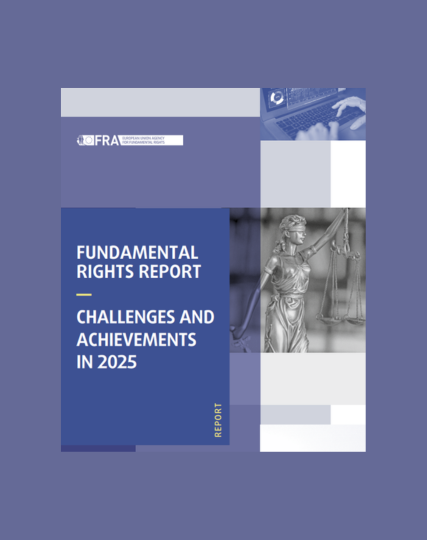
The Fundamental Rights Report - Challenges and achievements in 2025 focuses on fundamental rights developments and gaps in the EU in 2025. These include:
- Europe’s housing crisis: Rising housing costs and the lack of social and affordable housing have fuelled a housing crisis across the EU, as more and more people cannot afford their homes and risk becoming homeless. At the same time, safeguards against eviction and homelessness remain inadequate in several Member States, resulting in situations that undermine the right to human dignity.
- Employment challenges and labour exploitation: Migrant workers are increasingly relied upon to address labour shortages in the EU. Yet, there are serious employment-related challenges affecting third-country workers in the EU, including overqualification, discrimination and labour exploitation. Those who are exploited have almost no realistic path to justice or compensation.
- Threats to fundamental rights online: People across the EU are increasingly exposed to online hate speech, while at the same time, legitimate views are often wrongfully blocked or removed by online platforms. EU laws to regulate and protect online spaces have faced political and corporate resistance, mainly from outside the EU, which threatens democracy and fundamental rights safeguards. The lack of transparency from online platforms has also made it difficult to enforce the EU’s laws and regulations.
- The EU’s foundational values increasingly shaped EU law and policy making and, in its recent case law, the Court of Justice of the European Union has confirmed their operational significance. At the same time, 2025 developments revealed a gap between the proclamation of those values and the substantive protection of rights in practice, including in the context of lawmaking, digital governance, internal security, the treatment of migrants and asylum seekers at borders.
To overcome such challenges, FRA calls on the EU and its Member States to:
- Address housing as a fundamental right and to ground housing policies in EU fundamental rights law and international human rights law, consistent with Member State obligations. To address homelessness effectively, there is a need for comprehensive protection against forced eviction and safeguards for vulnerable groups, including as judicial guarantees, alternative housing, homeless shelters, and social and financial support.
- Address labour shortages while guarding against exploitation: extend opportunities for non-EU workers to work fairly and equally in labour markets. This could be achieved by recognising foreign qualifications, promoting early access to job markets and training, tackling discrimination and exploitative employment agencies.
- Ensure safer online spaces: hold online platforms accountable to tackle growing online threats to fundamental rights and democracy. Enforcing the Digital Services Act is essential to protect people’s rights online.
The Fundamental Rights Report reviews the state of selected fundamental rights in the EU in 2025 – a year that marked the 25th anniversary of the Charter of Fundamental Rights. Despite being a key instrument for enforcing the EU's foundational values, the Charter's application across the EU and Member States remains inconsistent. FRA calls on the EU and its Member States to apply it as the legal standard that it is, backed by systematic human rights impact assessments.
Quote from FRA Director Sirpa Rautio: “Fundamental rights continue to be threatened across Europe, as global tensions and assaults on the rules-based order threaten our democratic societies and the rights it purports to protect. The EU and its Member States must denounce the increasing pressure on the legal and procedural safeguards that translate our foundational values into practical guarantees. To do this, fundamental rights must remain at the core of all EU policies and actions, and our founding values must be invoked to ensure the full enjoyment of rights by all.”
FRANET Croatia are the Centre for Peace Studies, Human Rights House Zagreb and BaBe! - Be Active. Be Emancipated.